How it's built, layer by layer.
Our mattress isn't glued: it's stacked and stitched. Here is the whole assembly, with the real measurements — because a product that lets you see inside has nothing to hide.
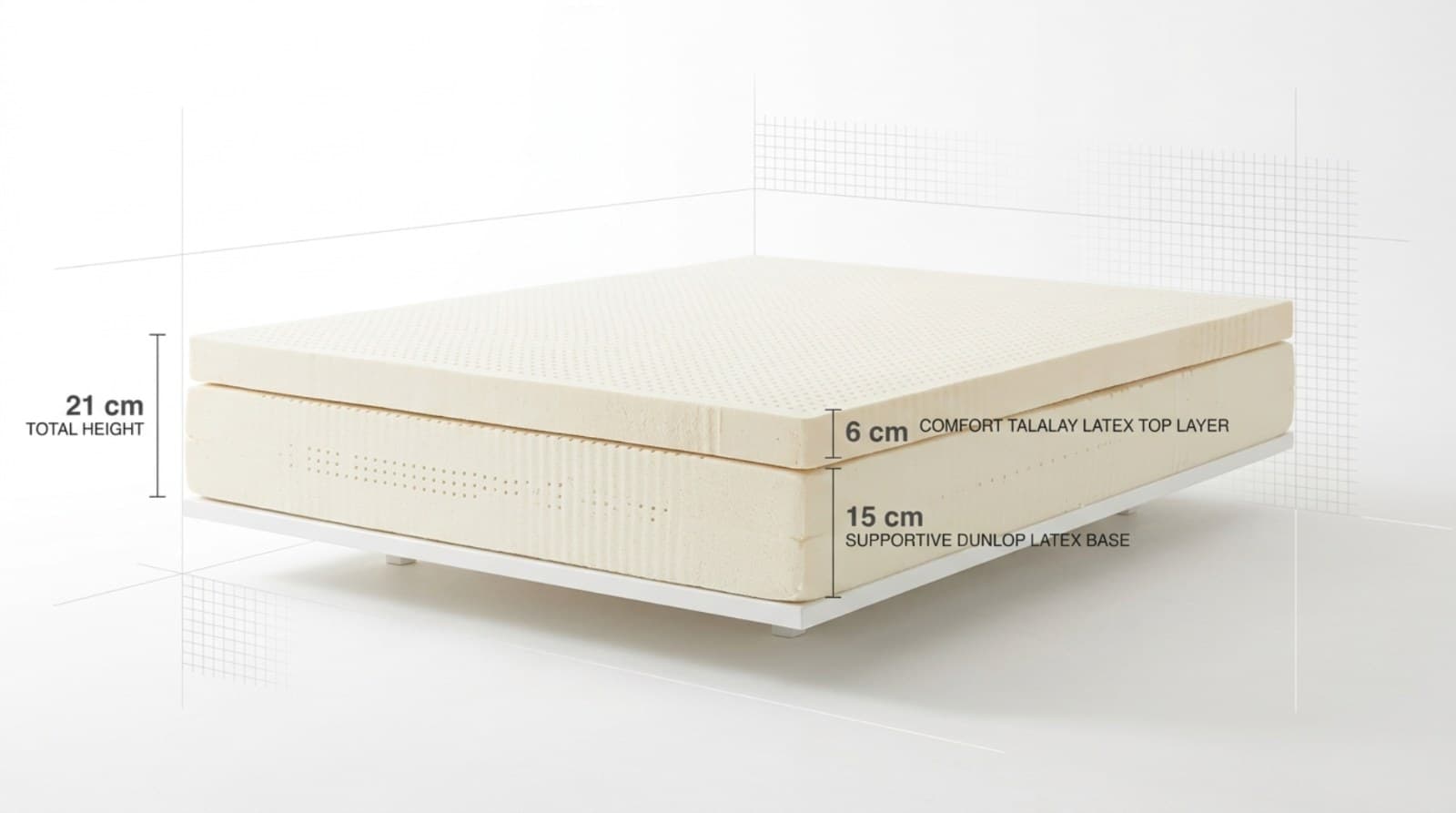
- 01
Comfort layer
First contact: more open latex, wide perforation. It's the one you feel as you lie down.
- 02
Support base
Higher density, tighter perforation. It holds the spine and sets the block's working life.
- 03
Stitched cover
Organic cotton, no adhesives. The layers come apart to be recycled — that's why there's no glue.
Comfort is designed with holes.
One and the same latex sheet can be soft along one stretch and firm along another: the mould's perforation pattern decides it. More holes and wider, softer; fewer and tighter, more support.
That's how each product's comfort is drawn: a shoulder that sinks, a lumbar that holds, a leg that spreads the load. And that's how dual firmness is born — two densities in a single pour.
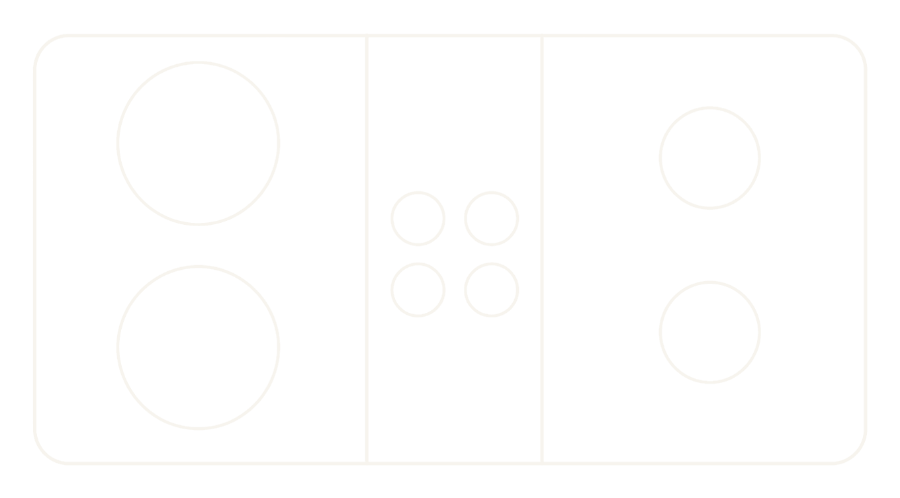
The shape is the function.
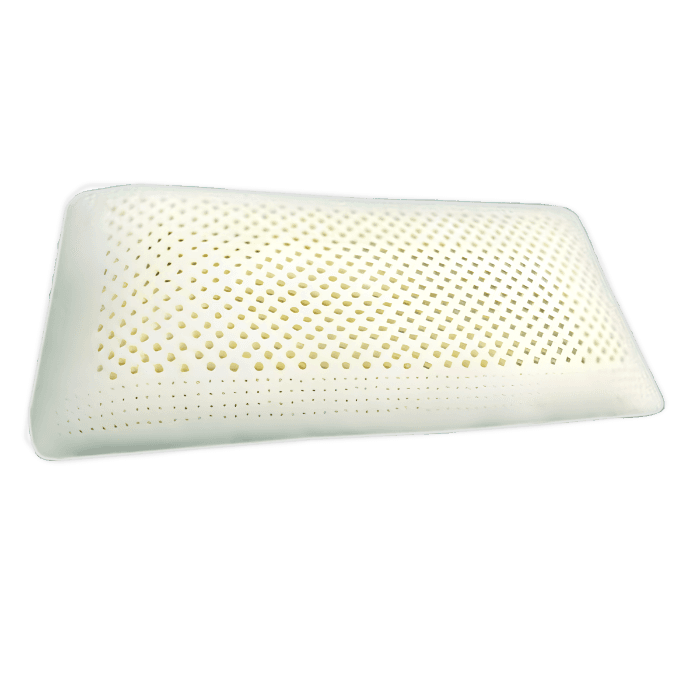
Awa Pillow King
15.5 cm loft
Even loft from side to side: it fills the gap between shoulder and ear. Uniform perforation — the story here is the height.
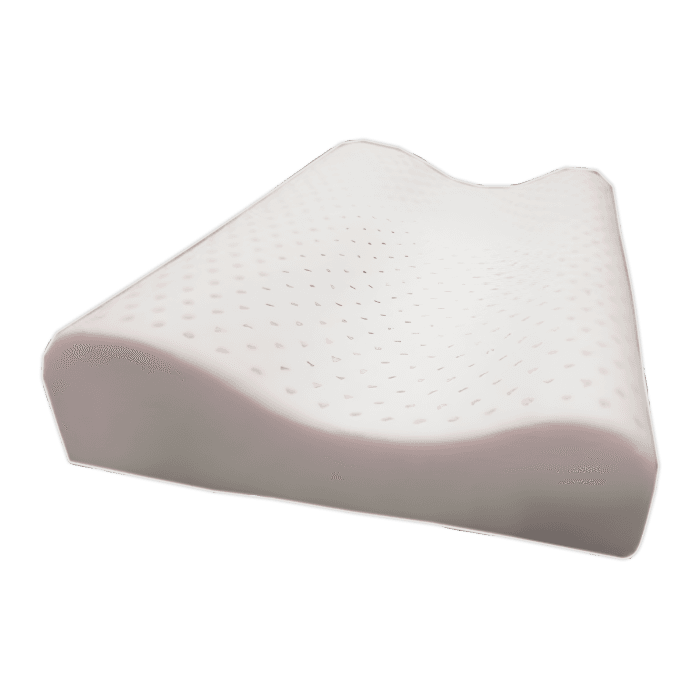
Awa Pillow Contour
13.5 cm loft
Two heights in one wave: the crest holds the neck, the valley receives the head. The firm zone sits exactly under the curve.
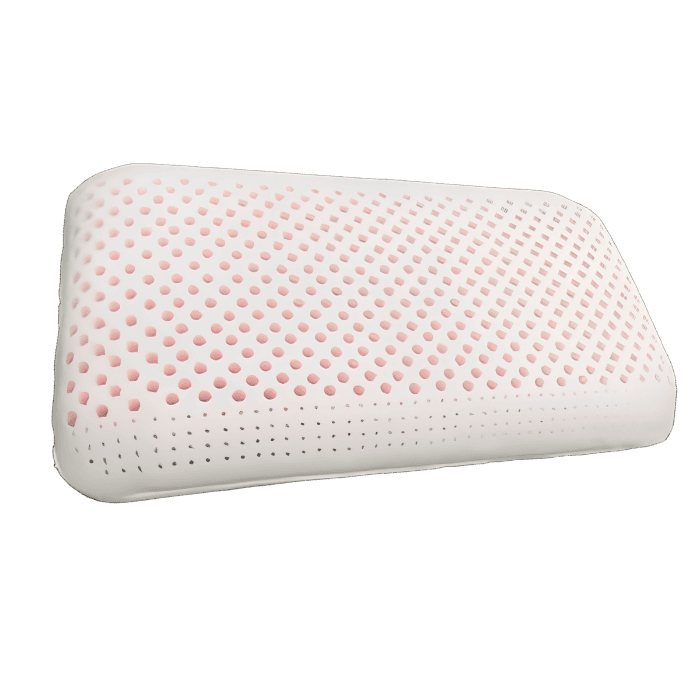
Awa Pillow Soap
10 cm loft
Compact and rounded: medium density throughout, made for any position and for fitting in a suitcase.
This page is a document in the HQ editor — text, renders and annotations change without touching code, with the usual guardians. Blocks: /capas · /zonas · /forma